

No te pierdas nuestras últimas actualizaciones
Reciba noticias y contenido directamente en su bandeja de entrada
¡Gracias! ¡Hemos recibido tu envío!
¡Ups! Algo salió mal al enviar el formulario.


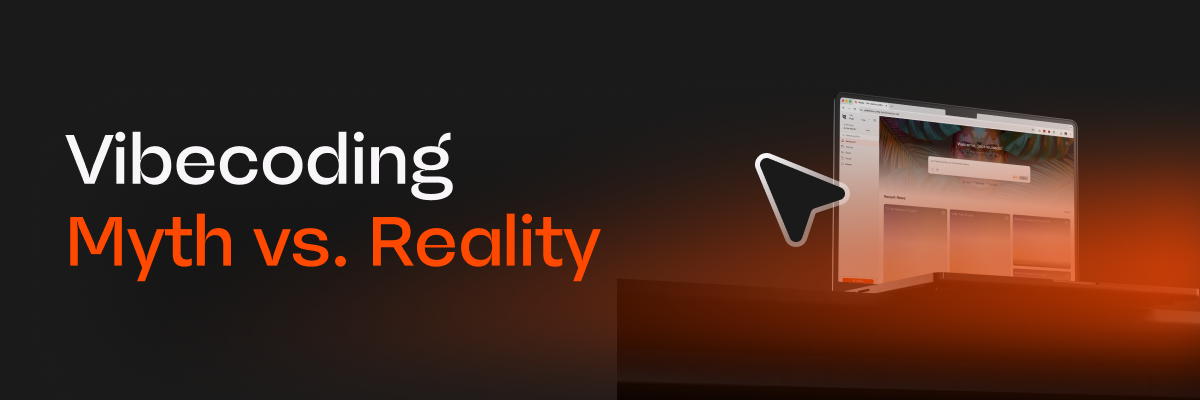
There’s a particular feeling you get the first time AI builds something that actually works. You describe a feature in plain English. A few seconds later, there it is: A working UI. An actual prototype. Sometimes even a feature that feels surprisingly close to production. It feels like magic.
It also makes you wonder why we ever spent so much time writing code in the first place.
Over the past year, I've started using AI for parts of my work that I wouldn't have imagined before. Instead of creating six interaction states in Figma, I can prototype an idea in Claude and send it to engineering within minutes.
Instead of writing long product specifications, I can build something people can react to. Conversations get shorter. Ideas become tangible faster. That's a real improvement. I wouldn't want to go back.
One of the things that surprised me most was what happened after. Sometimes a prompt fixes the feature you asked for. And quietly breaks another one. Sometimes a database migration disappears (this happens to us more often than I would like it to).
Sometimes an edge case that engineering had already solved weeks ago suddenly comes back. Nothing dramatic (sometimes very dramatic). Just enough to remind you that software is a system, not a collection of screens. Those moments completely changed how I think about AI-generated code.
It understands your request. Those aren't the same thing. Your product contains months (sometimes years) of decisions: Trade-offs, architecture, conversations that never made it into documentation, business rules, tiny constraints that only exist because someone learned the hard way that another approach didn't work, etc…
AI doesn't see that history and that’s where some trouble might appear.
One thing I've noticed while working with our engineering team is that AI shifts where the value is. Writing code becomes easier. Deciding what should exist becomes harder.
You spend less time typing. More time reviewing. More time asking whether this implementation actually fits the product. More time thinking about long-term consequences instead of immediate output.
Overall, AI has made me appreciate engineers more.
Sometimes AI lets us reach that answer much faster. Sometimes it lets us reach the wrong answer much faster too.
That's why I don't think the future belongs to teams that replace engineering with AI. I think it belongs to teams where AI accelerates execution while experienced engineers protect the integrity of the system.
And both are very valuable roles!
I don't think the conversation should be about whether AI can build software anymore, because clearly, it can. The more interesting question is what happens after the first version works.
That's where product, engineering, architecture, testing, and judgment still matter. Maybe even more than before.



.jpg)